Can Every Caller Understand You? Making Phone Messages More Accessible
- Tuesday 3rd November 2026
- Kevin Broughton
- On Hold
Think about the last automated message you struggled with.
Perhaps the music was too loud, the voice too fast or the
phone number read out once, quickly, with no chance to write it down.
Now imagine that happening on every call.
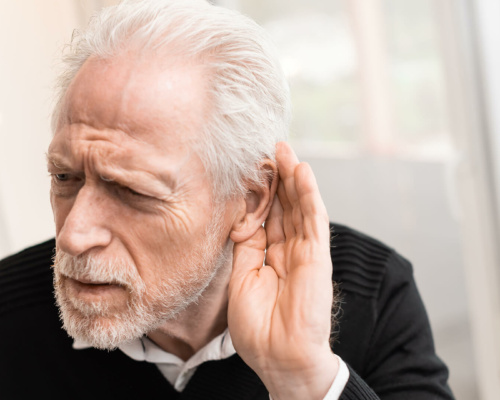
RNID reports that one in three people in the UK are deaf, have hearing loss or live with tinnitus, which is more than 18 million people. More than half of people aged 55 and over have some hearing loss, rising to almost 80% of people over 70. If your customers include older adults, and most businesses' do, this is a significant part of your audience.
The good news is that the changes that help them help everyone. Clearer audio is better audio.
Why phone lines are harder than face to face
Telephone audio is compressed and narrow in frequency range. Detail that is obvious in a room disappears down a phone line. Add background music, a quick delivery and a caller using a mobile on a busy street, and comprehension drops fast.
That is before you consider hearing aids, hands-free kits and speakerphone, all of which change how your message sounds.
Writing for clarity
Keep sentences short and direct
Long sentences are hard to follow when the audio is imperfect. Say one thing at a time, and put the subject and verb at the start so listeners know immediately what the sentence is about.
Instead of: "Available from our website, which is open 24 hours a day, are account statements, invoices and order tracking."
Try: "On our website, you can view your account, download invoices and track an order, at any time of day."
Say the important things twice
Phone numbers, email addresses and dates deserve repetition, with a pause between. Give listeners time to find a pen.
Avoid jargon and abbreviations
Internal department names mean nothing to callers, and acronyms are easily misheard. Say "our service team" rather than a three-letter code.
Be careful with spoken web addresses
Long URLs are difficult to hear and harder to spell. Keep to a short domain, and say it slowly. If it needs spelling out, it may be better placed in an email or text message.
Voicing and production choices that matter
Pace
Around 150 words per minute is comfortable for most phone messages. Rushing to squeeze in another offer is a false economy if callers miss half of it.
Clarity of voice
Professional voice artists are trained to articulate clearly without sounding stilted. That matters more on a compressed phone line than most people realise. You can hear a range of voices on our professional voice talent page.
Music levels
Music adds warmth, but it competes with speech. The voice should always sit clearly above the music. In our productions, the mix is balanced specifically for telephone playback, which is one of the biggest differences between a studio recording and a self-recorded file.
Pauses
A short pause between messages gives listeners a moment to process what they have just heard. It also makes a production feel calmer and more confident.
Consistency
Using the same voice across your welcome greeting, IVR menu and on hold messages helps callers tune in. Every change of voice asks the listener to adjust again.
Menus that do not punish slower listeners
IVR menus are a common barrier. A few simple rules help:
- Give no more than four options at a time
- Say the reason before the number: "For accounts, press 2"
- Allow enough time between options
- Always offer a repeat option
- Always offer a route to a person
If a caller cannot follow a menu, they do not complain. They hang up, and you never find out why. Our guide to IVR menu best practice covers the structure in more detail.
Offer more than one way to reach you
Not every customer wants to use the phone, and some cannot. Alongside your phone line, make sure callers can reach you by:
- Email or an online contact form
- Live chat or messaging, if you have the capacity to monitor it
- Text message, which suits many deaf and hard of hearing customers
- Relay services, which many deaf people use to make phone calls
Mention these alternatives in your audio and list them clearly on your website. RNID's deaf awareness guidance is a useful starting point for teams who want to communicate more inclusively.
Do not forget your website and videos
Accessibility is not only about audio. If you publish videos, captions make them usable for far more people, and they also help anyone watching with the sound off. The Web Content Accessibility Guidelines set out the recognised standards for digital content.
A consistent approach across your phone, website and video content gives every customer the same quality of experience. Our article on video narration covers how voice and visuals work together.
A quick accessibility review you can do today
- Call your own number from a mobile, on speakerphone, in a noisy room
- Note anything you cannot catch first time
- Check whether the music ever covers the voice
- Time how quickly numbers and dates are read out
- Count the options in your menu and the pause between them
- Ask an older customer or colleague to try it and tell you honestly
Anything you struggle with, your customers will struggle with more.
Frequently asked questions
- Is there a legal requirement for accessible phone messages?
Service providers in the UK have duties under equality legislation to make reasonable adjustments for disabled customers, which can include how you communicate. The practical point is simpler: clear audio and alternative contact routes serve your customers better and reduce frustration for everyone. - Does background music have to be removed?
No. Music at the right level adds warmth and reassurance. The issue is balance, not the music itself. A professional mix keeps the voice clearly in front. - Would a slower voice help?
A measured pace helps, but speaking unnaturally slowly can sound patronising. Clear articulation, sensible sentence length and well-placed pauses do more than simply slowing down. - Should we offer a text alternative to our phone line?
If you can monitor it properly, yes. Many deaf and hard of hearing customers prefer text-based contact, and plenty of hearing customers do too. - Can you review our existing recordings?
Yes. Send us what you currently use and our team will listen through and tell you honestly what is working and what could be clearer.
Conclusion
Accessible phone audio is not a specialist project. It is good production, careful writing and a bit of empathy for the person at the other end.
Shorter sentences, a measured pace, a clean mix, menus that do not rush and a text alternative for people who need one. Each change is small. Together, they make sure every caller can understand you first time.

Make your phone audio clearer
Our team writes, voices and mixes audio specifically for telephone playback, so every caller hears your message clearly.
Request a free audio demo, get a quick quote or call 0333 990 0009 and we will review what you have in place.
About us and this blog
Onhold Studio has been developing custom on hold audio messages for almost two decades! We specialise in audio marketing for both VoIP and conventional telephone systems. Our team can handle every step of the process for you, whether you need music or on hold messaging, call menu options, or out-of-hours audio messages.